The Small Roofing Detail That Could Cause Thousands in Water Damage
Learn how a simple detail like kickout flashing can prevent serious water damage and why it's crucial for roof integrity.
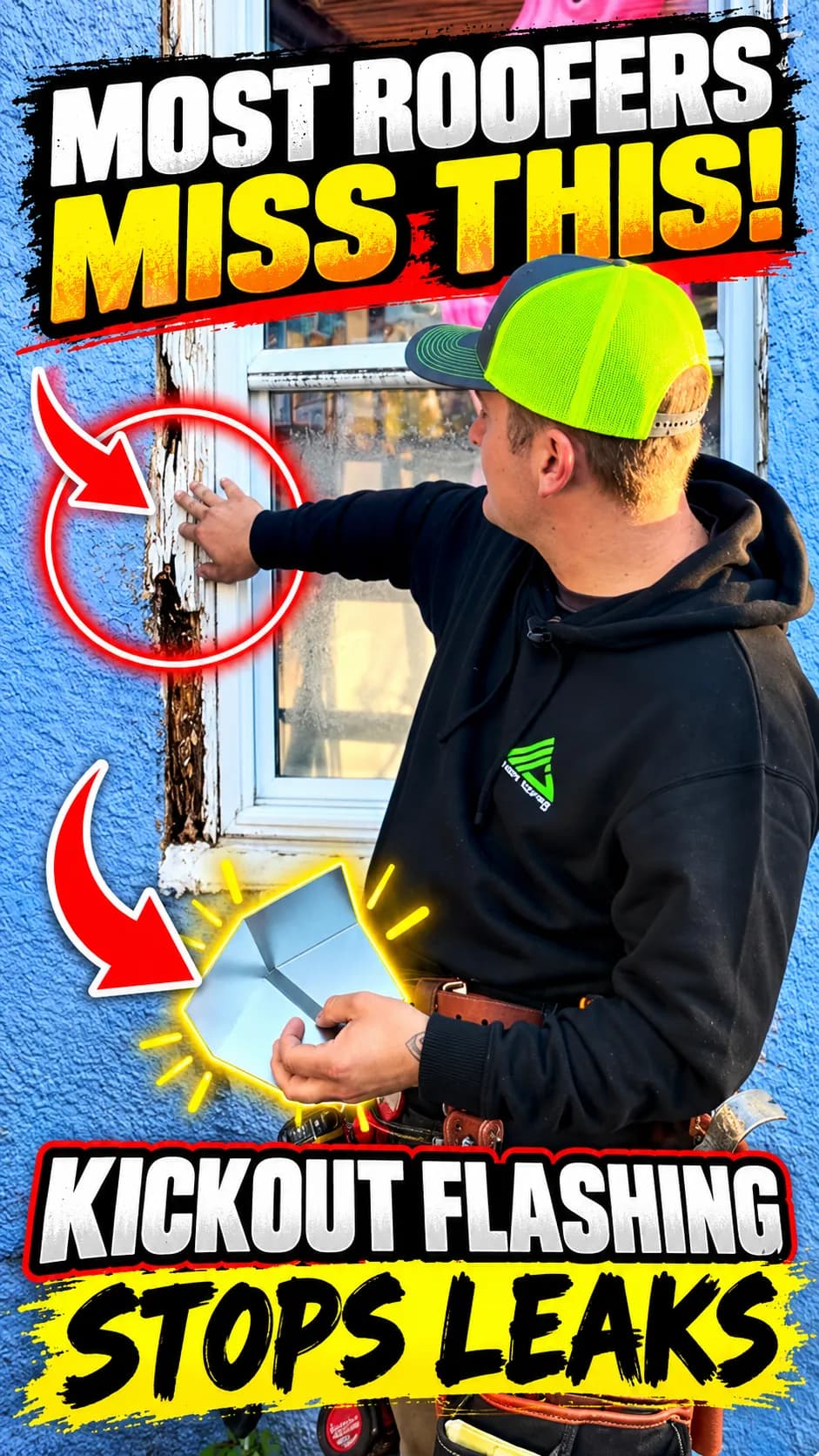
Some of the most serious water problems start with a detail you can barely notice from the
ground: kickout flashing. This small piece of metal sits where a sloped roof runs into a sidewall
near a gutter or eave.
What does kickout flashing do?
Rainwater runs down the roof surface and along the wall flashing. At the bottom of that run,
kickout flashing turns water outward toward the gutter instead of allowing it to disappear
behind siding or trim.
When the kickout is missing or poorly formed, water can repeatedly wet the same wall area.
Over time, moisture may damage sheathing, insulation, framing, or interior finishes—
sometimes before the homeowner notices anything unusual.
Why caulk is not the answer
Caulk may temporarily cover a gap, but it cannot replace a properly integrated flashing system.
A good detail works with gravity, overlapping materials, siding clearance, and water-resistant
barrier integration. The specific configuration depends on the roofing and siding assembly.
Signs of a problem
Look for persistent staining beneath roof-to-wall transitions, swelling or deterioration at trim,
peeling paint, or water marks inside a nearby room. Those signs don't automatically prove a
kickout failure, but they justify further investigation.
When should it be fixed?
Ideally during new roofing or siding work, when the flashing and weather barrier can be tied
together correctly. However, existing homes can often be evaluated and corrected too. At
Reliant Roofing, we pay close attention to the details that protect the parts of your home you
can't see. If you have a suspicious roof-to-wall transition, schedule an inspection before a small
leak becomes a major repair.
Reliant Roofing | Finally, a contractor you can rely on.