What Is EPDM Roofing and How Long Does It Last?
Explore EPDM roofing for low-slope roofs. Understand its longevity, installation process, and when it might need repair or replacement.
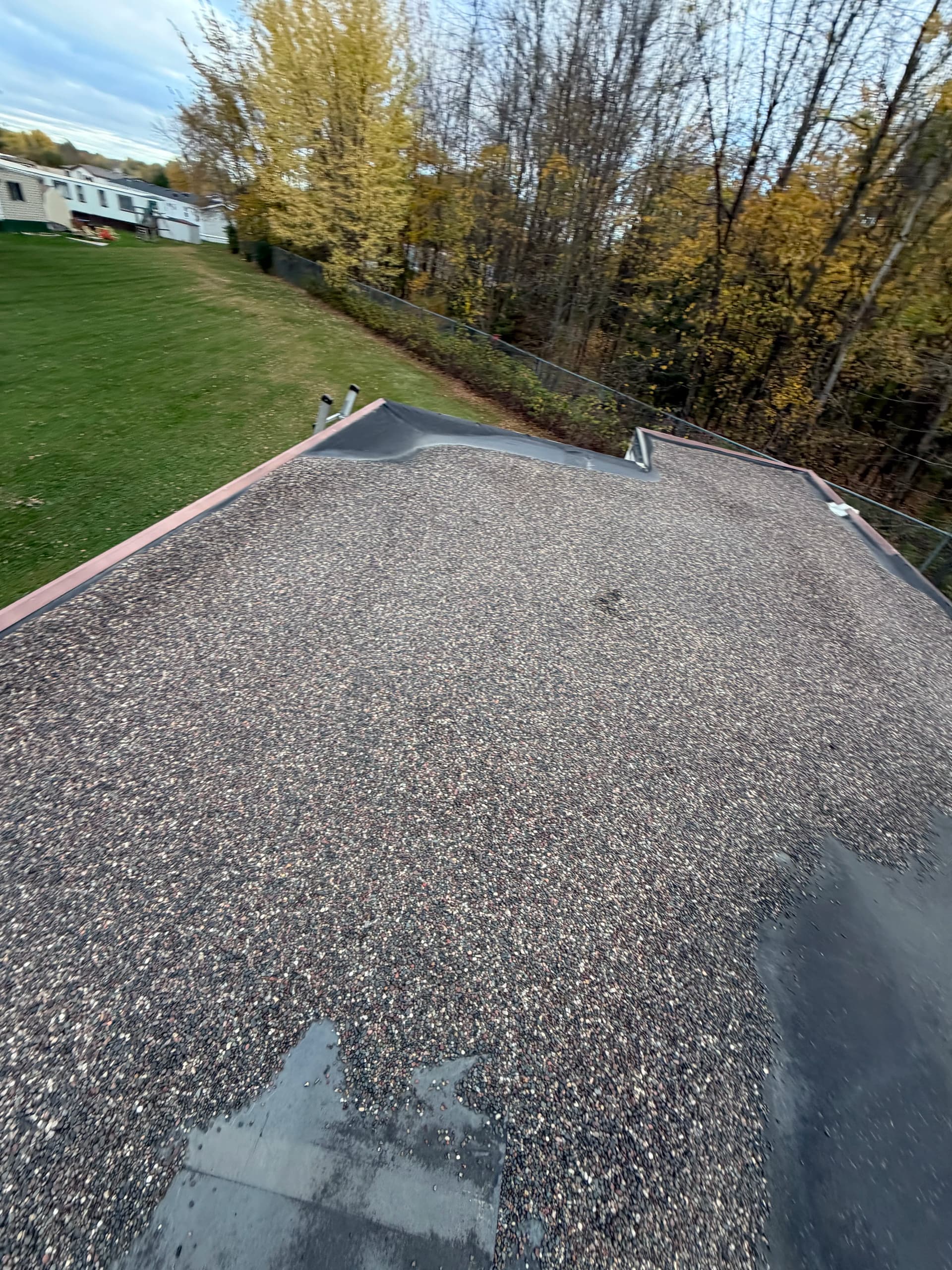
Commercial buildings, additions, garages, and certain residential roofs often have slopes too
low for typical asphalt shingles. One common solution is EPDM, a synthetic rubber roofing
membrane used on low-slope roofs.
How an EPDM roof works
EPDM is installed as part of a complete assembly that may include insulation, cover board,
compatible attachment or adhesive, seams, flashing, and drainage details. Depending on the
design, systems can be fully adhered, mechanically attached, or ballasted.
The membrane is only one part of performance. Scuppers, interior drains, gutters, parapet
coping, penetrations, and roof slope all require appropriate detailing.
How long does EPDM last?
Well-designed and maintained EPDM systems have a long service record. Service life depends
on membrane type and thickness, installation quality, drainage, rooftop traffic, exposure, and
maintenance. A fixed lifespan promise without inspecting the assembly isn't realistic.
What causes EPDM problems?
Open seams, damaged flashing, punctures, clogged drains, ponding, and deterioration around
roof penetrations are common concerns. Not every visible pond is automatically a failure, but
drainage and structural implications should be evaluated.
Repair or replacement?
A localized seam defect may be repairable. Repeated leaks, widespread moisture, unsuitable
substrate conditions, or aging components may justify replacement. Moisture investigation and
design review help determine whether existing insulation can be retained.
Reliant Roofing works with low-slope projects in Minnesota and can explain options for
membrane replacement, drainage improvements, and long-term maintenance.
Reliant Roofing | Finally, a contractor you can rely on.